Theoretical and empirical proof display that recessions are steeper in countries with excessive tiers of private debt and/or credit booms. We discover that a higher stage of debt before a recession is correlated with smaller monetary increase after the economic slowdown has completed. In contrast, better credit score increase before a recession is associated with higher Gross Domestic Production boom after the crisis. The consequences of debt on consumption are more negative, implying that once recession takes place human beings consume less and store more than what they did before recession takes place. However, the overall monetary effects of the debt measures on Gross Domestic Production and intake increase are limited to a certain extent.
What is private debt?
Private debt is the debt that has been gathered by individuals or private companies. They prevail in several different forms such as a personal loan, credit card, corporate bond, business loan and many other forms. Private debts are usually a funding method for fast growing and medium sized companies. Basically, there are two types of private that are industrial debts and household debts.
Effects of Private Debt on a few macroeconomics indicators:
Evidence show that recessions are usually steeper in countries where high levels of private debt prevails. High levels of debt before a recession is directly correlated so a small sized economic growth. In a private company if private debts increase by a large amount then the company’s deficit will increase which will lead to wither increase in private debts or halt in production. This deficit will usually lead to a fall in Gross Domestic Production. If private debts increase then interest rates will increase for sure so that deficits are not too much plus inflation will start to take place in that country if such a situation occurs. An increase in private debt will also reduce the amount being credited from banks at that time so that the government does not want to take too high of an amount of loan from international banks to avoid any kind of debt spiral. Low debt aids consumption-driven economic growth. A very high debt can curtail consumption when interest rates are high and consumers become reluctant to borrow. Unsold inventory leads to production cuts & creates unemployment.
Industrial debt of other countries (% of their Gross Domestic Production)
- United States of America – 115%
- United Kingdom – 313%
- France – 213%
- Germany – 141%
- Netherlands – 522%
- Luxembourg – 6307%
- Japan – 74%
- Italy – 124%
- Spain – 16%
- China – 15%
Household debt:
1)Belgium – 60.41%
2)Australia – 121.71%
3)Brazil – 24.69%
4)China – 49.22%
5)Switzerland – 127.72%
6)Luxembourg – 66.80%
7)New Zealand – 91.90%
8)Netherlands – 105.53%
9)United Kingdom – 86.35
10)United States of America – 77.66%
India’s Current Industrial Debt
In 2017, India had a private debt of 54.55 of the Gross Domestic Production and the government had a debt of 70.4% of the Gross Domestic Production. Therefore, India was in a total debt of 125% of its Gross Domestic Production according to the IMF figures. Recently even household debts have shot up significantly in the year of 2017-2018, which has been encouraged and helped by the banking sector’s rising focus on lending of money. India’s household debt has increased by 1.8 times, that is from rupees 3.7 lakh crore to rupees 6.74 lakh crore between the year 2016 and 2018. It increased at a rate of 5% over the last 5 years. Therefore, the non- profit assets are increasing and the Gross Domestic Production.
Household Debts
These debts have been surging in a high rate in quite a short period of time. Indian household debt has increased by 1.8 times from Rs 3.7 lakh crore to 6.74 crore between the years of 2016-17 and 2017-2018. These debt’s annualized rate increased by 13% in the past 5 years.
What are households borrowing for?
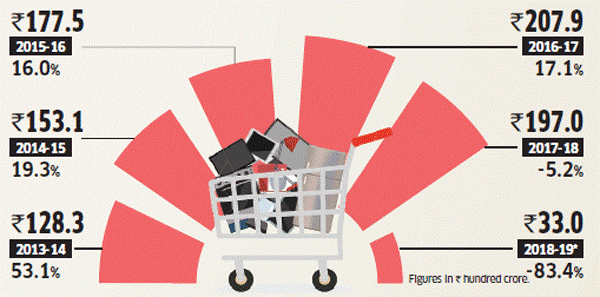
- Consumer Durable loans
Consumer durable loans have come across a slowdown in the current year 2018-19 as the lenders feared any kind of default on unsecured loans.
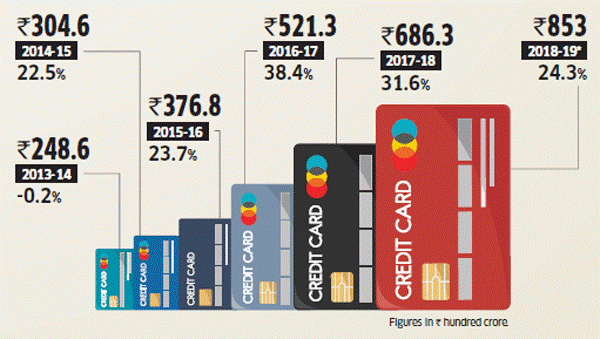
- Credit Cards
Numerous numbers of credit card usage contributed to a rise in the financial liabilities of the household.
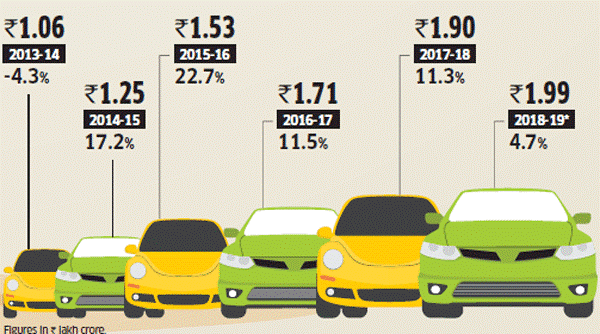
- Vehicle loans
Rising interest, NBFC crisis and low auto sales during festive season affected the loans in the current year of 1018-2019.
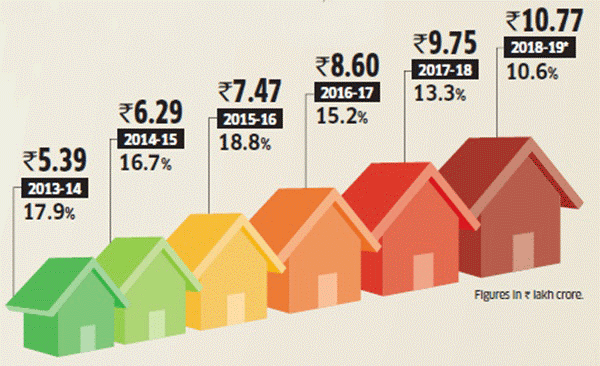
- Housing loans
Housing loans
maintained moderate growth. However, rising interest rates impacted buyer
sentiments in 2018-19.
- Education loans
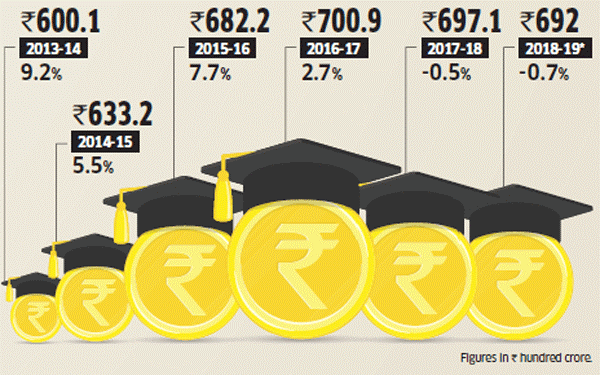
Banks hesitate to grant education loans due to the rising defaults and lack of margin requirements for loans up to Rs 4 lakh.
- Personal loans
Personal loans grew at
the fastest pace. Households use such loans for funding their travel plans, weddings
and repaying debt.
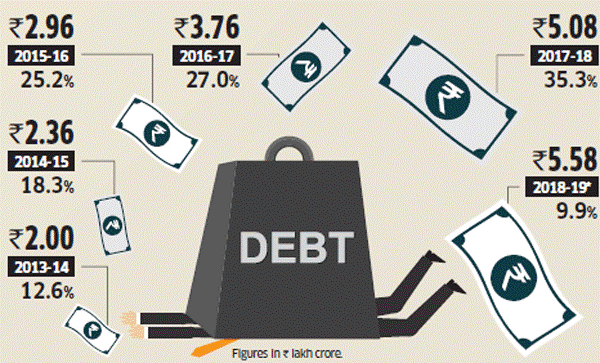
How are households piling up the debts?
In the situation of bank lending, share of personal loans and credit cards have shown a substantial increase.
| Bank lending | 2013-14 | 2018-2019 |
| Consumer Durable | 0.23% | 0.04% |
| Housing Loans | 9.47% | 13.13% |
| Credit Cards | 0.45% | 1.05% |
| Education | 1.09% | 0.86% |
| Vehicle Loans | 1.92% | 2.46% |
| Personal Loans | 3.61% | 6.90% |
Household Debt over the years
2013-14: Rs 3.59 lakh crore
2014-15: Rs 3.77 lakh crore
2015-16: Rs 3.91 lakh crore
2016-17: Rs 3.75 lakh crore
2017-18: Rs 6.74 lakh crore


Great research manh!
LikeLike
This article really opened my eyes on this macroeconomic problem prevailing in India
LikeLike
Very informative read.
LikeLike
Well consolidated and easy to read. Highly informative article. Good job!
LikeLike
I feel It was very well explained by Ayush, really found it interesting and the presentation was great.
LikeLike
Well compiled. Relevant topic for India now.
LikeLike
Thoughts have been well put forward. Got to learn a lot by reading this article.
LikeLike
A very precise and informative article. Well done.
LikeLike
Pretty detailed understanding of the the impending rise of the private debt situation unfolding in India. For someone without an economics background, I found the article to be fairly well consolidated and rightly represented for my understanding. Keep up the good work.
LikeLike
I had never really thought about this, but this article helped bring my focus to such an important issue. Thanks!
LikeLike
I’m in the 12 grade and I recently got a project about private debt in India, this article was really helpful so I just wanted to leave a mention . The stats were well encompassed ( I know because I tried searching for them myself ) and the information is extremely relevant.
LikeLike
Written extremely well. Very informative. All in all, a great read!
LikeLike
Good job. Really detailed.
LikeLike
This is a huge eye opener for people unaware about the negative effects of private debt. With private debt pilling up over the years in India, more and more people need to be aware of the economic situation around them. Well written !
LikeLike
Great article! Superbly written
LikeLike
Well researched article explained so easily
LikeLike
The whole debt cycle was put up brilliantly and to the point.
Well consolidated with figures too.Great beginning.Good read.
LikeLike
The whole debt cycle was put up brilliantly and to the point. The article was really detailed yet precisely to the very point till the end
LikeLike
Very informative and enriching article . It provided me with facts and figures i wasn’t aware of . It is very well researched.
LikeLike
Very well researched article . All the facts and figures pertaining to the debt cycle were precise .
LikeLike
Very well written, loved the topic.
LikeLike
Amazing !!
LikeLike
Subtle explanation, good job
LikeLike
Very informative. Thank you for posting
LikeLike
Very well explained!
LikeLike
It’s great article to learn something new and really great research done to create such an informative article
LikeLike
Very informative article. Explained thoroughly about the Debt Cycle
LikeLike
In-depth knowledge and great writing style. Very well done.
LikeLike
Knowledge on private debt is very important today. thanks!
LikeLike